A $35 Mining Rig Runs Local LLMs on 54GB of VRAM
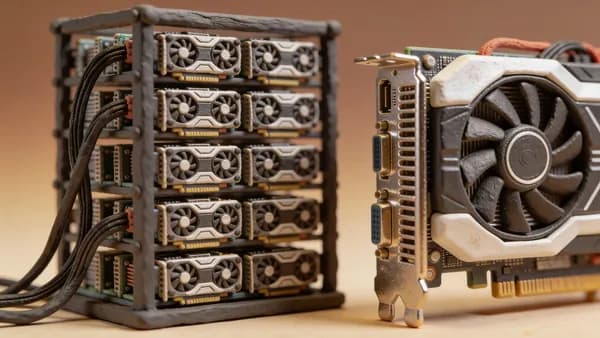
A Reddit user paid about $35 for a retired crypto-mining rig holding nine 6GB P106 mining GPUs. The 54GB of VRAM is real — but the memory bandwidth is not.
 Vlad Makarovreviewed and published
A Reddit user going by u/markpronkin bought a retired crypto-mining rig off Avito, a Russian classifieds site, for 3,000 rubles — about $35 after talking the seller down from an asking price of roughly $60. Inside were nine P106 GPUs, all of them working, each carrying 6GB of memory. That is 54GB of video RAM for the price of a decent cable. The post, titled "54gb vram for 35$", pulled roughly 1,300 points and 250-plus comments on r/LocalLLaMA.
The Catch Behind 54GB
The headline number looks impressive until you count the cards. The P106 is the mining-specific variant of the GTX 1060, a Pascal part from 2016, and each one holds only 6GB. Nine of them add up to 54GB, but they are wired through the PCIe x1 risers that mining frames rely on — narrow lanes that throttle how fast data moves between GPUs. Capacity, in other words, is not the same thing as usable capacity.
In practice the owner reports more than 30 tokens per second running Qwen3.6 35B-A3B on Ollama, with free electricity covering the power bill. Wccftech notes the rig can handle something like Qwen3.8-27B at 8-bit quantization, and models up to 70B parameters at 4- or 5-bit. It boots from a USB stick, because the only missing part was an SSD.
Why This Matters
For hobbyists, the story is not the speed — it is the price floor. Pascal-era hardware is slow by 2026 standards, and the bandwidth ceiling is real. But retired mining farms are now the cheapest place to buy raw VRAM, and the new market still prices mainstream cards by their memory, as the recent fuss over the 16GB ceiling keeps showing. A rig that costs less than an SSD can run models that would otherwise demand a four-figure workstation.
The thread had some fun with the deal. One widely quoted reply read: "Bro has no conscience negotiating 54GB VRAM down from $60 to $35 in 2026." The point still stands: at $35, the buyer's only real ongoing cost is electricity, and he says he is not paying for that either.
What's Next
Expect more of these rigs to change hands as mining hardware keeps aging out. They will not win benchmarks, and the x1 risers guarantee that memory-hungry workloads stay slow — but for someone with cheap power and patience, the cost of entry has never been lower. Builders chasing capacity over speed are already stacking older accelerator cards in the same spirit, as the 768GB CMP 170HX build showed.