Character.AI's Chapter 11: a $20 million licence bid dressed up as a sale
Character.AI filed for Chapter 11 in Delaware and Disney is the stalking-horse bidder for a $20 million IP licence. The filing is a litigation strategy.
 Vlad Makarovreviewed and published
Character.AI filed for Chapter 11 bankruptcy in Delaware late on Monday, and the number travelling with the story is $20 million — what Walt Disney has agreed to pay, as a "stalking horse" bidder, for a licence to some of the chatbot company's intellectual property. That is an opening bid in a court-supervised auction, not a price for the business, and the filing reads as much like a litigation strategy as a financial one. Roughly 12 million people still use the platform. Whether it is still running in December is a question for the bankruptcy court.
What the filing actually says
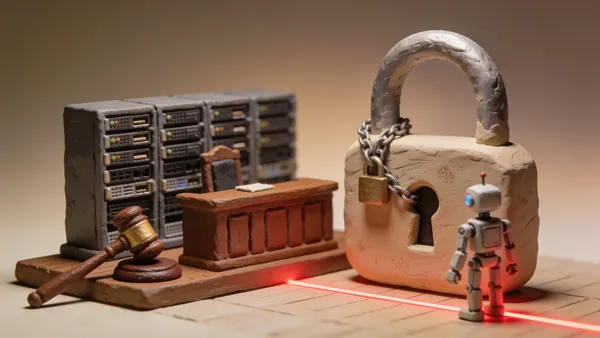
Character Technologies Inc., the company's US owner, opened a voluntary Chapter 11 case in the US Bankruptcy Court for the District of Delaware and asked the court to approve bidding procedures for a sale of all or substantially all of its assets, according to the company's own announcement. Reuters, working from the papers filed on Tuesday, reports that the company has been burning through more than $8 million a month and now operates at a loss of roughly $8 million to $9 million monthly, despite about 12 million active users. It listed estimated assets and liabilities of between $50 million and $100 million — a self-reported range from the petition, not an audited figure. Character.AI says the platform keeps running with "minimal disruptions" and has filed first-day motions to keep paying wages and vendors. If no bid carries the service forward, it will be wound down.
Houlihan Lokey is the investment bank on the sale, Wilson Sonsini Goodrich & Rosati the legal adviser, and Areté Partners the restructuring adviser. Disney has hired Skadden, Arps, Slate, Meagher & Flom. Court filings are being posted to a claims agent site run by Stretto.
Twenty million is an opening bid, not a valuation
The licence agreement was struck before the filing. Disney Worldwide Services would pay $20 million for a non-exclusive perpetual licence to "certain" intellectual property and "certain" company claims, and supply transition services staffed by former Character.AI employees it has already hired. That structure makes Disney the stalking horse: the first bidder, whose offer sets the opening price and is expressly subject to higher or better offers under section 363 of the Bankruptcy Code.
The word "certain" is doing real work. It means the licensed asset list is still being drawn up, and nothing in the public filings itemises the app, the character catalogue or user data as separate line items. Nor does $20 million tell you anything about the company's worth, because it buys a licence rather than the enterprise. Anyone reading the headline number as a sale price has the mechanics backwards.
Chapter 11 as a settlement vehicle
The company's stated aim is a "global resolution" of every legal claim against it. Those include investigations launched by US states and international regulators, and private lawsuits alleging that its chatbots pushed children to suicide and self-harm. Kentucky has alleged the chatbots encouraged users to cut, starve or kill themselves, and Pennsylvania that they posed as doctors. In January, Character.AI reached preliminary settlements in five private lawsuits; the terms were never disclosed, and recent court filings in those cases indicate the settlements have not been finalised or paid. Asked on Tuesday how the bankruptcy might affect the claims, the company declined to comment.
Whether chat logs help or hurt in that queue has not been tested. Those conversations are the central evidence in the private suits, and how much of a user's history a provider hands over is contested on its own terms: a Florida case this month turned on an AI lab monitoring one user's messages and passing them to police in a felony arrest.
Chapter 11 no longer answers whether the claims are valid. It collects them into one queue with a court-approved order of payment, which is a way of putting a price on litigation rather than defending it, and it binds claimants who are not in the room.
The numbers behind it
| Item | Figure in the filings |
|---|---|
| Active users | roughly 12 million |
| Monthly operating loss | about $8 million to $9 million |
| Monthly cash burn | more than $8 million |
| Estimated assets and liabilities | $50 million to $100 million |
Read those together and the shape of the business is clear. A deficit of $8 million to $9 million a month is roughly $100 million a year, at or above the top of the company's own estimated asset and liability range — the annual shortfall is comparable to the entire balance sheet it reported. Twelve million users were never the missing ingredient. They were not enough to cover computing power and AI salaries, which is what the filing itself blames.
One more ratio is worth holding onto. A $20 million licence bid sits between a fifth and two-fifths of the company's own estimated asset and liability range, and it buys rights over part of the estate rather than the estate itself.
The people who built it left first
Two former Google employees founded Character.AI in 2021. In 2024, Google licensed its technology and rehired the founders — CNBC names them Noam Shazeer and Daniel De Freitas — and Shazeer left for OpenAI in June. Disney announced in September that it was appointing Character.AI's chief executive, Karandeep Anand, as its chief technology officer; he started on October 2, reporting to chief executive Josh D'Amaro, and Disney said a number of the startup's technical staff were expected to follow.
So the founder and CEO layer is gone, and it went to two of the companies now closest to the sale. What the estate is offering is a licence, a user base and a character library, with Disney supplying the staff to keep the lights on during the auction.
Disney's road from legal threat to bidder
None of this is a first encounter between the two companies. In September 2025, Disney sent Character.AI a cease-and-desist letter demanding it stop using Disney's copyrighted characters without permission; the company said it had removed them. Thirteen months later, Disney is the buyer of record for a perpetual licence over whatever intellectual property the estate can describe. Paying $20 million for a licence, with the option to be outbid, is a cheaper position than litigating over characters a court has not yet valued.
What would settle it
Three documents would turn a story about a number into a story about a business. The first is the bidding procedures order, which sets the deadline for competing offers and confirms whether anyone besides Disney is in the room. The second is the schedule of assets and liabilities, which replaces the $50 million to $100 million band with line items, including the treatment of user data and of the litigation liabilities. The third is the outcome of the auction itself: if nobody tops $20 million for a perpetual IP licence, that is the market's verdict on what the assets are worth.
The takeaway
This is not the collapse of a product nobody wanted. It is the end of a business that paired enormous consumer engagement with compute costs and legal exposure it could not outrun, and the Chapter 11 is the tool being used to cap the second half of that problem. Disney's $20 million buys a licence that other bidders can beat, and the sale is scheduled to close in late November or early December. Until the schedules are filed, every figure in this story is a floor, a ceiling or an estimate.