Apple's Harbor app: a leak, a signup form, and nothing to run
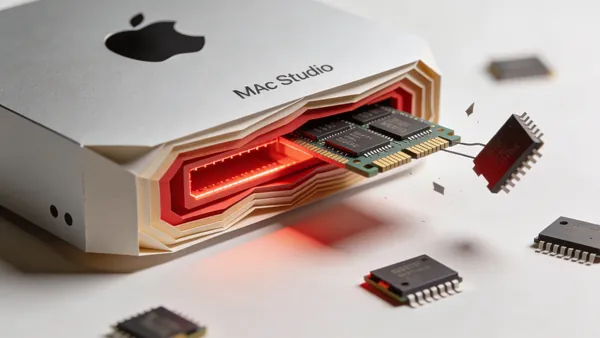
A leaker says Apple's Harbor app turns Macs into a private AI server and clusters them over Thunderbolt 5. The paper trail is one X post and a signup form.
 Vlad Makarovreviewed and published
On 10 November Aaron Perris, the leaker who posts as @aaronp613, wrote that Apple is working on an app called Harbor. "Harbor turns your Mac into a private AI inference server," the post says. AppleInsider and 9to5Mac both wrote it up the same day. Neither could point to anything Apple has said publicly about it.
What the post promises
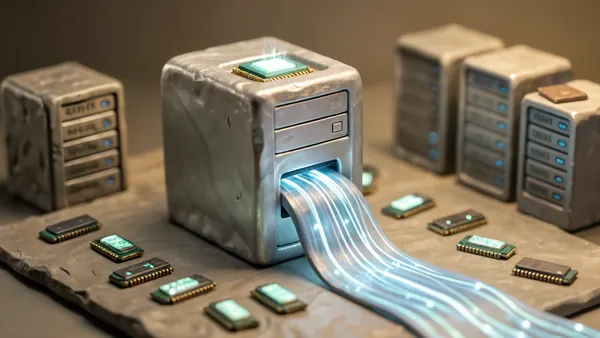
The claims arrive as a fixed package. Open-weight models run locally on Apple silicon, data never leaves the hardware, nothing reaches the cloud. Two or more Thunderbolt 5-capable Macs pool their unified memory into what Perris calls "a single inference resource," for models too large for one machine and for more concurrent requests. Setup takes "minutes, not hours" because the app detects the machines over a cable and forms a cluster with "no manual configuration, no command line, no infrastructure expertise required." Models are browsed, downloaded and loaded inside the app. AppleInsider adds two details: the app was formerly known as Fabric, and Perris says it sits in a private preview under the Claris brand.
The paper trail is one form
Hours later Perris followed up to say Apple had "taken down Harbor from the App Store now," linking a Claris page that still loads. Headed "Claris Harbor" and labelled Private Preview, it restates the pitch in marketing language, promising "zero cloud fees, no per-token billing" and asking for a first name, last name, email, company and phone number in exchange for updates. The header image's alt text still reads "Claris Fabric." That page is the entire artifact. There is no supported-model list, no memory ceiling, no throughput figure, no compatibility list, no price and no date.
The plumbing already shipped
Local inference is not the news. llama.cpp, LM Studio, Ollama and Apple's own MLX already run open-weight models on a Mac, and macOS 27's fm command put a small on-device model in the terminal. Clustering is not new either. AppleInsider reports that Apple added Thunderbolt 5 support and RDMA to macOS and MLX, and that in October 2026 it described a Minions system turning idle GPUs in Apple silicon Macs into a dynamic virtual GPU cloud. The same outlet put numbers on the ceiling: Thunderbolt 5 carries a maximum of 80Gb/s against Thunderbolt 4's 40Gb/s, and with no Thunderbolt 5 switch the machines must be daisy-chained, which limits how many can be pooled before latency eats the gain.
What is plausibly new is the packaging: Claris, which presents itself as "an Apple company", turning clustering into a setup screen. What would settle it is modest. A public beta, or a support document naming the Macs and models Harbor supports. Until one appears, this is one post, two rewrites of it, and a form.