Xi's 'open source' line is from July, and it never promised a download
A viral r/singularity post credits Xi Jinping's November APEC speech with backing open-source AI. Every item in it comes from his 17 July keynote in Shanghai.
 Vlad Makarovreviewed and published
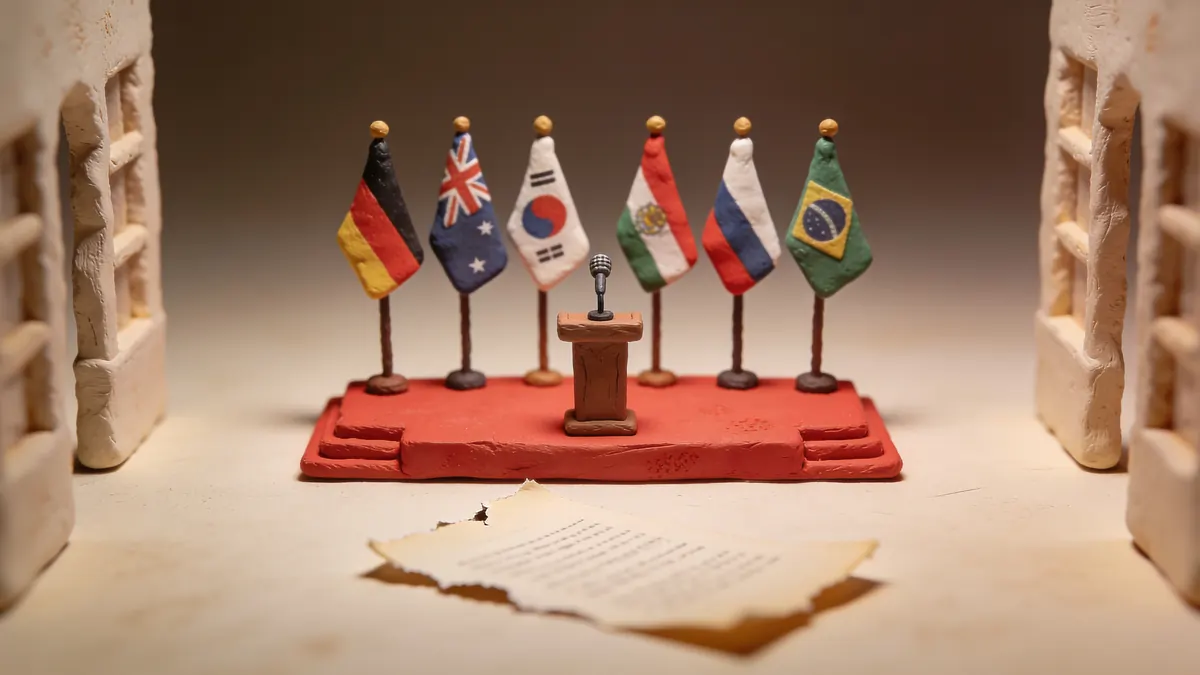
On 18 and 19 November a post titled "Xi Jinping Called to Support Open-Source" sat near the top of r/singularity: about 1,200 points, and more than 200 comments at the time of collection. Its selftext listed the Chinese president's backing for open source, his opposition to "overstretching" national security, 5,000 training slots for developing countries, and cooperation centres with ASEAN, the Arab League, the African Union, CELAC, the SCO and BRICS.
Every item on that list is real. None of it was said in November. The speech the post describes is the keynote Xi delivered in Shanghai on 17 July 2026, and the summit he addressed on 18 November — APEC's CEO gathering in Shenzhen — does not contain the phrase at all.
The readout the post was built from
Take the list one item at a time against the official English readout from China's UN mission. The 5,000 training and seminar places over five years are there. So are the cooperation centres with the Association of Southeast Asian Nations, the League of Arab States, the African Union, the Community of Latin American and Caribbean States, the Shanghai Cooperation Organization and BRICS. So is the World Artificial Intelligence Cooperation Organization, which "has come into being in Shanghai", and the promise to enable 30 countries to use the MAZU meteorological warning system.
The framing is where the post drifts, and less than the date does. It calls the appearance Xi's "first-ever" at China's World AI Conference; the official readout describes the opening ceremony of the 2026 edition and the accompanying High-Level Meeting on Global AI Governance without saying either way, and some coverage at the time did describe it as his first in-person appearance there. That detail is not the problem. The month is. The venue is Shanghai, the date 17 July, the speech title "Joining Hands to Build a Just and Equitable System for Global AI Governance".
Three dates, and only one of them is this week
| Date | Occasion | What the official record contains |
|---|---|---|
| 17 July 2026 | World AI Conference and High-Level Meeting on Global AI Governance, Shanghai | "encourage open source, openness, collaboration and sharing"; WAICO founded in Shanghai; 5,000 training places; six application cooperation centres; MAZU for 30 countries |
| September 2026 | BRICS summit, New Delhi | proposal for a BRICS AI open-source community and joint work on large language models, as reported by the Express Tribune |
| 18 November 2026 | APEC CEO Summit, Shenzhen | innovation partnerships, digital economy and AI cooperation, removal of trade and investment barriers, the 15th Five-Year Plan, a bay-area economic association; no reference to open source |
Read down the third column and the recycling is easy to see: every specific in the Reddit post belongs to the first row. The middle row matters: Beijing does use the words in summit settings, but what Xi proposed in New Delhi was a community, a cloud platform and seminars — cooperation infrastructure, not a licence.
The sentence, and the paragraph around it
"We should seize this rare, historic opportunity to encourage open source, openness, collaboration and sharing."
That is the first of four observations in the July speech. It opens a passage about innovation-driven development, addressed to "all countries" and followed by a call to coordinate the upgrading of traditional industries. It is a statement about climate — how governments should treat open development — not about what China's labs will publish.
The second observation is the one that constrains. It asks for "laws and regulations, technological monitoring, early warning and emergency response systems" so that AI is "always under human control", and it calls on countries to "jointly oppose overstretching the national security concept in the field of AI and placing one country's security over that of others". Both halves belong to the same speech, and both are consistent: encourage openness as an economic principle while building the machinery of state oversight. Posters kept the half that reads as a concession and dropped the half that reads as control.
What Shenzhen actually heard
The 18 November speech is well documented. AFP's account quotes Xi urging countries to "actively build partnerships for scientific and technological innovation, deepen cooperation in the digital economy and artificial intelligence and promote a green and low-carbon transition", alongside calls to eliminate trade and investment barriers and "promote inclusive and balanced development". Xinhua's readout, carried by China Daily Asia, summarises the speech under headings that never touch model licensing: an Asia-Pacific community, peace and stability, innovation-driven growth, mutual benefit, openness and cooperation, the 15th Five-Year Plan, and a bay-area economic association. Neither account contains the words open source.
Absence is normally weak evidence. Here it is worth something, because two independent accounts agree, one of them the state wire, and the July text is public in full for comparison. This is not a translator dropping a clause; it is a different speech about trade and growth, delivered the day before an expected meeting with Donald Trump.
Why a July sentence travelled in November
Recycling is rarely random. The week of the APEC summit is also the week Washington moved on Chinese weights. Reuters reported on 18 November that Treasury and the White House science office have discussed requiring US companies to disclose their use of Chinese models on their own websites — three unnamed sources, no draft text, no confirmation the idea has traction. The same week brought tighter US rules on renting AI chips in third-country data centres, the practical route by which Chinese models reach American customers.
That is a live argument about open-weight models, and it needs a headline. Reuters notes Chinese models were the three most used by token volume on OpenRouter in October. A post claiming the Chinese president personally endorsed open source on the eve of the summit fills the space neatly, even though the endorsement is four months old and narrower than the framing suggests.
There is a local reason to be careful with the phrase. Alibaba's open-source commitments have a habit of arriving as screenshots rather than documents — we looked at Qwen's pledge and found no official page carrying it. And Qwen4-Max, announced on 15 November, ships no weights at all. "Open source" in this market is a positioning word as often as a licence term.
A principle is not a licence
This is where the post errs in substance, not only in dating. "Encourage open source" in a governance speech is diplomatic language about how the international system should treat open development. It binds nobody: not Alibaba, whose downloads remain a product decision, and not the licence, which can change next quarter.
The BRICS initiative is the closest thing to a commitment, and it is still a framework: a community, seminars, a cloud platform, an intention to cooperate on large language models. A real commitment to publishing weights would arrive as a licence file and a repository, the way Meta and Nvidia do it. Speeches do not download.
So the honest measure of Chinese open-source policy is not the communiqué. It is the LICENSE file, the model card, the terms that say whether commercial use is allowed and whether the weights stay up after the next release. Those are checkable on any given Tuesday, and they change without a summit.
The version of the story that survives checking
Xi did call for encouraging open source. He said it in Shanghai on 17 July 2026, in a speech that names no model, makes no commitment about weights, and pairs the encouragement with a demand for monitoring and human control. On 18 November in Shenzhen he spoke about trade, innovation partnerships and the Five-Year Plan, and the words did not come up.
That is a smaller claim than a viral post, and a more useful one. It tells you where to look: official readouts with dates attached, not screenshots of them; licence files, not conference language. The next time a speech is quoted as a policy shift, the first question is not whether the words are real. It is when he said them, and what the sentence before and after were asking for.