Huang weighs a comeback while Washington tells Nvidia to hire an outsider
Four days after resigning, Jensen Huang is discussing a return with confidants as allies build a lobbying war room and Bessent demands an outside CEO.
 Vlad Makarovreviewed and published
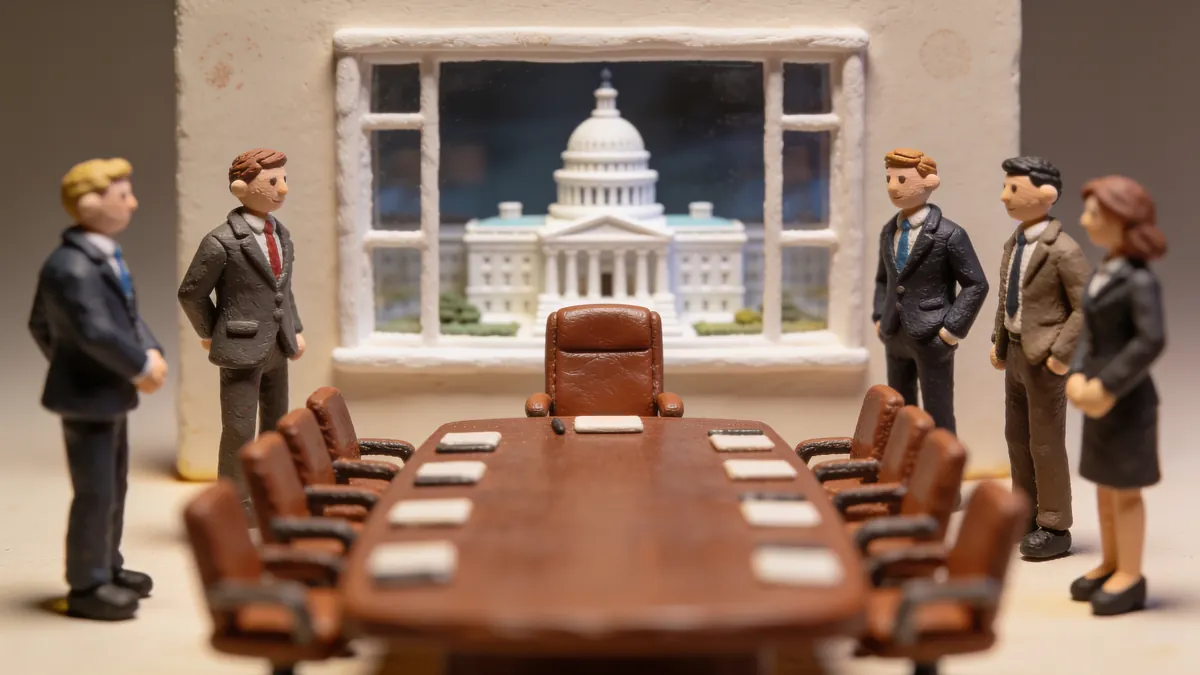
Nvidia's succession crisis stopped being a single story over the weekend. On one track, the former chief executive is reportedly testing whether he can take his job back. On the other, the US Treasury Secretary is publicly demanding that the board hand the job to somebody who has never worked at the company. Neither camp has a decision to point to, Nvidia itself is not commenting, and the board has to absorb both pressures while running the most valuable chipmaker in the world.
A resignation the board cannot close
Jensen Huang stepped down on Thursday, 12 November, after revelations of extramarital affairs, one of them involving Alice Huang, a former Megaspeed executive whom US intelligence officials suspect of spying for China. The disclosures were reported by CNBC on 15 November.
The corporate response was swift and, in one respect, unprecedented. Nvidia's board named CFO Colette Kress interim chief executive and made Harvey Jones the company's first-ever board chair, according to Fortune. Both moves read as stabilisation: Kress is a finance operator who knows the numbers and the banks, and a chair gives the board a single throat to speak through. Neither answers the question the market is actually asking, which is whether the company intends to replace a founder who built its entire commercial architecture or merely to hold the seat until he is available again.
That ambiguity is what the last three days have been about. Read the original account of the resignation and the sequence looks less like a clean exit than a pause the board did not fully control.
The war room
Reuters, citing the Financial Times, reported on 15 November that Huang "is considering a comeback as Nvidia's chief executive, and has discussed with confidants the possibility of returning." The Reuters account also carries the detail that makes the story more than gossip: one Huang ally told the FT they were putting together a "war room" of Silicon Valley executives to lobby for his return, and would try to garner support from the White House.
The same person offered the line that will be quoted for as long as this lasts. "Everyone that matters in tech outside the frontier labs loves Jensen," they said, and the FT reported the effort had Huang's support. Nvidia did not respond to a request for comment made outside regular business hours.
Strip the adjectives and you have a former CEO running an outside-in campaign on his own board, with the White House as the target audience. That is not how a return is normally arranged. It is how a contested return is arranged, when the person doing the returning does not trust the people who would have to vote on it.
A petition is not a proxy fight
The employee side of the pressure is easy to measure and hard to convert. Business Insider reported on 14 November that a petition at standwithjensen.com had passed 100,000 signatures, with Elon Musk, Tim Sweeney and Garry Tan among them, and organisers claiming more than 5,000 Nvidia staff had signed. Wccftech put the total above 156,000 a day later. The petition coverage tracks the same spread: impressive numbers, no disclosed verification method.
Signatures are sentiment. Board seats are votes. Nothing in Nvidia's charter converts one into the other, and the people who signed are not the people who will vote on the shortlist. Anyone reading the petition as evidence that Huang will be reinstated is mistaking volume for leverage.
Washington picks a side
Treasury Secretary Scott Bessent made the administration's preference explicit on CNBC. He called for a "dramatic shakeup" at Nvidia and said the board should look outside the company for its next chief executive. Then he went further than a sitting Treasury Secretary usually goes about a private employer.
"I want to keep coming back to what was the culture at Nvidia, and were they pressing these seemingly illicit sales to goose their revenues and their earnings?" Bessent said, adding: "If this were a bank and they hadn't complied like this, the OCC would be in there right now, and a lot of the executives would be removed."
He also questioned a surge in reported Singapore revenue at a time when China sales were falling. Nvidia stopped separately reporting Singapore revenue in November 2025, saying a new methodology based on customers' headquarters rather than billing addresses was better. That explanation was defensible then. It is a liability now, because the company can no longer show the working.
The CNBC interview sits inside a bureaucratic fight that predates the scandal. Bessent said on Friday, 13 November, that "Treasury, War, USTR, and State were in favor of putting Megaspeed on the entity list for months. But Commerce has the pen." He is feuding with Commerce Secretary Howard Lutnick, and both are expected to accompany Trump to China this week, where the president meets Xi Jinping on the sidelines of the APEC summit in Shenzhen. Fortune, citing The Information, reported that Megaspeed and its Malaysian subsidiary shipped at least $7.5 billion in Nvidia chips to China over two years, a figure that gives the export-control argument its weight.
What the board is actually doing
The board's own search has a name in it. The FT reported on 13 November that Nvidia had approached Arm CEO Rene Haas about the job. Fortune's list of people seen as possible candidates is short and mostly outside the building:
- Colette Kress, Nvidia CFO and interim chief executive
- Ian Buck, Nvidia engineer
- Lisa Su, AMD chief executive
- Rene Haas, Arm chief executive
Two of those four would require poaching a rival's sitting CEO, which means a search that cannot be quiet, and a leak that arrives before any offer does. Kress is the continuity option and the one Bessent's "outside" demand rules out by definition.
The skeptics have the stronger case
The comeback story has an obvious hole, and the people closest to the story named it immediately. Ed Zitron wrote on X that the FT piece "does not feature a single mention of Nvidia itself accepting or being interested in this, clearly a crisis comms move," adding: "The board wanted to oust him and he resigned." Rohan Goswami was blunter on the same platform: "This is not happening. He is not coming back," absent a proxy fight or a presidential intervention.
That is the correct frame. A return would require the board to reverse a decision it made four days ago, in public, under congressional and Treasury scrutiny, while the underlying allegations are still being examined. The war room has Silicon Valley money and the petition has staff anger. Neither has a vote. What Huang's allies are actually buying is time and the appearance of inevitability, and the FT story, by their own account, was pitched to them.
Huang's reported return is possible. It is not likely, and the gap between those two words is where Nvidia's next month will be decided. The board meets with a search underway, an interim CEO who has been told by a cabinet secretary that she is the wrong kind of candidate, and a founder who is calling around. Watch two things: whether the board confirms or denies the Haas approach, and whether Bessent's entity-list complaint produces a Commerce Department action before Trump lands in Shenzhen. Either one moves the odds more than another hundred thousand signatures will.