Pax Silica's first deliverable is a list, not a licence
The US and its Pax Silica partners agreed a joint list of AI supply chains that need protection. It creates working groups and an inventory, not a chip tier.
 Vlad Makarovreviewed and published
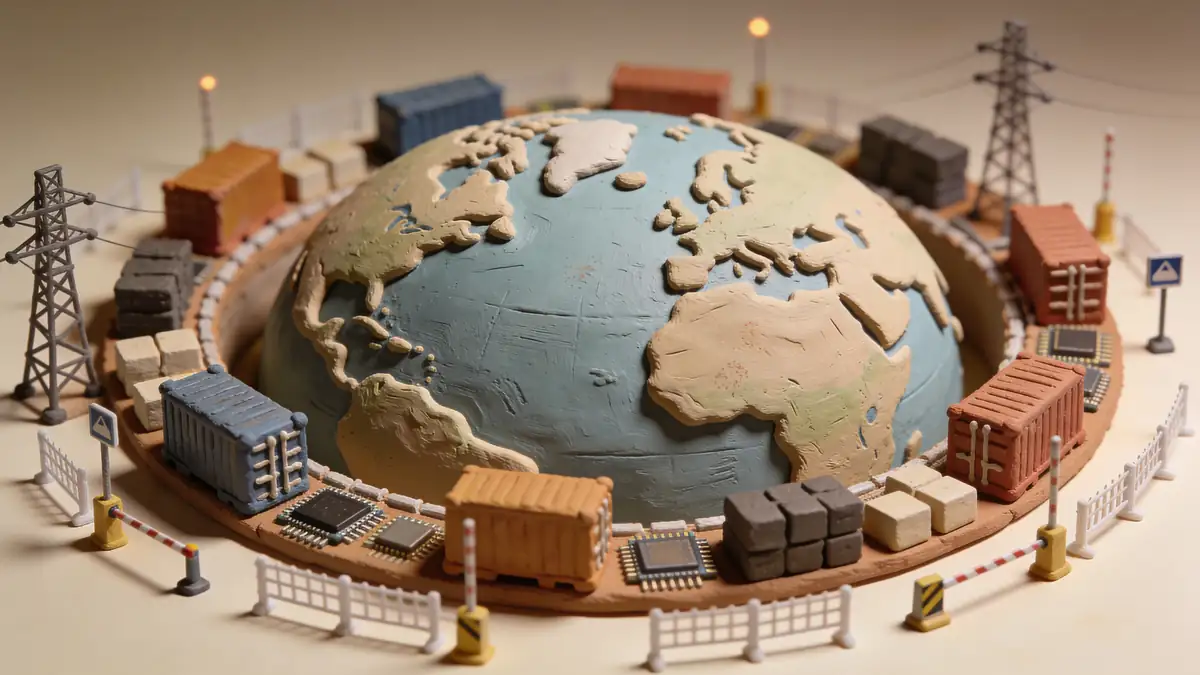
On 15 November the United States and its Pax Silica partners agreed to build a joint list of the technologies and supply chains behind artificial intelligence that need greater protection, aiming to blunt China's hold over the same inputs. The Financial Times reported it first; an AP relay carried the substance. What was signed is an alignment document, not an export-control regime.
What the declaration commits to
Jacob Helberg, the State Department's under secretary for economic affairs, told the FT that South Korea, India, Qatar and the United Arab Emirates had signed the San Francisco Declaration on the Secure Foundations of Enduring Prosperity, and that Germany, Sweden, the Netherlands and the European Commission would follow the next week. The text on the department's Pax Silica page commits signatories to working groups on AI supply-chain vulnerabilities and on "economic hubs" to attract investment, to information sharing on where supply chains should be diversified, and to stronger defences against technology theft that could give a hostile actor military advantage.
Its "strategic stacks" run from software and frontier foundation models through connectivity, compute and semiconductors, advanced manufacturing and logistics, minerals refining and energy. Helberg's summary: "If the 20th century ran on oil and steel, the 21st century runs on compute and the minerals that feed it."
The roster does not match the timetable
The State Department page lists 25 signatories, the European Union, Germany, Sweden and the Netherlands among them. Helberg told the FT those four were expected to sign next week. Both statements are in circulation and neither has been withdrawn.
A list is not a licence
Nothing here creates a licensing tier for accelerators, and nothing reaches model weights at a border. Enforcement stays national: the Commerce Department's entity list, whose live edge is the Megaspeed case, not a multilateral schedule. What exists is an inventory plus working groups, which sets vocabulary and channels rather than permissions.
That still matters for one reason. Naming frontier foundation models as a protected stack puts weights inside a signed, US-led supply-chain document for the first time, where the category previously appeared only in unilateral controls. A shared list is a precondition for shared restrictions. It is not one.
Why the timing matters
The accord lands as President Trump prepares to meet Xi Jinping at the APEC summit in Shenzhen, Washington accusing Beijing of falling short of a late-2025 trade truce. Beijing has been drafting its own answers, a draft export-control framework that would treat training and talent as things to hold back.
The FT headline adds Japan, Australia, Israel and the UK to the signatory group, which the roster does not explain. The next test is procedural: whether the joint list is published, who writes it, and whether it acquires binding language. Until then, Pax Silica is a club drafting an inventory.