Anthropic's record IPO lasted two days before the market repriced it
Anthropic's record IPO priced at $83, opened at $111.50 and closed at $97.17, then slid about 9% as the Nasdaq erased all 2026 gains and Nvidia fell 14%.
 Vlad Makarovreviewed and published
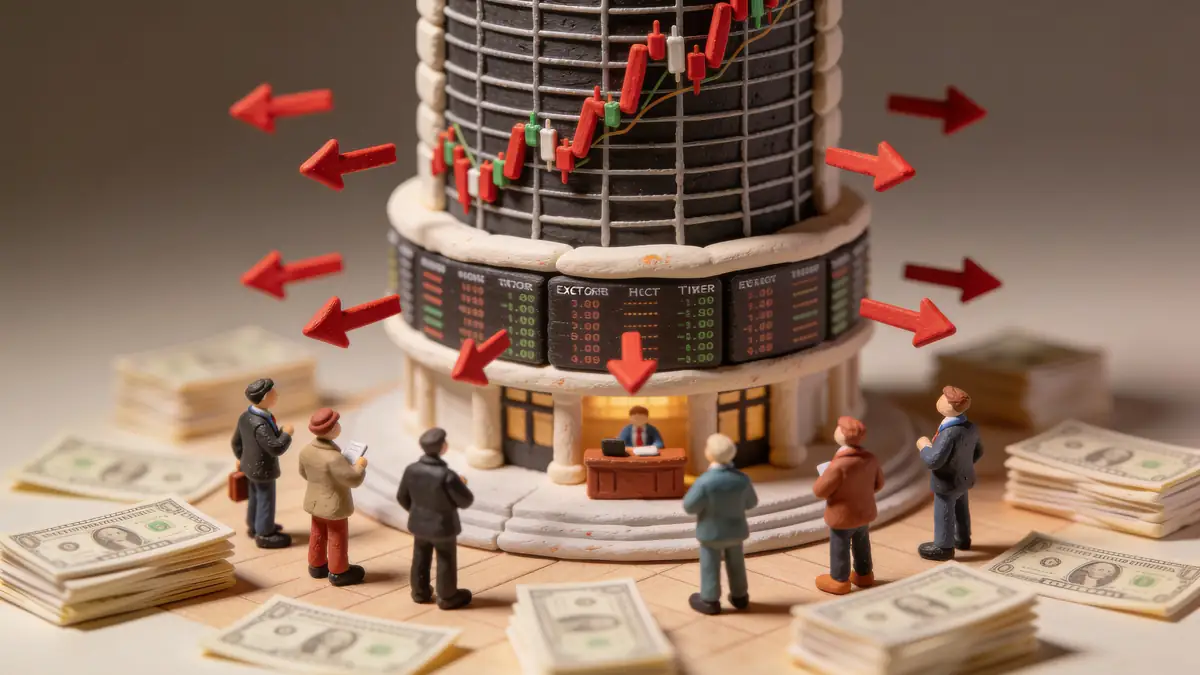
Anthropic sold $81.3 billion of stock on Wednesday, the largest initial public offering ever completed, and by Friday afternoon the shares were worth a few dollars more than the price the underwriters had set. In between, ANT opened at $111.50, carried a valuation above $2 trillion for part of its first session, closed that session at $97.17 and then fell about 9% while the Nasdaq Composite gave back every point it had gained in 2026. A listing marketed as evidence of confidence in the AI trade finished the week as one more line in its decline.
Eighty-three dollars, and a book that cleared above the range
The pricing notice is four paragraphs long and settles the mechanics. Anthropic, PBC sold 980,000,000 Class A shares at $83.00, above the $70 to $78 range the roadshow had circulated. Of those, 956,351,354 came from the company and 23,648,646 from selling stockholders, who keep their proceeds. Gross proceeds of roughly $81.3 billion before fees beat the $75 billion SpaceX raised, and the underwriters hold an option on 147,000,000 more.
Trading began on 19 November on the Nasdaq Global Select Market. The first print was $111.50, a 34.3% premium to the offer price, and the opening trade alone was worth about $12 billion. At the $83 price the company was valued near $1.5 trillion; at the intraday peak it briefly passed $2 trillion, which would make it one of the largest companies in the United States within hours of its first tick.
Two valuations for one closing price
The first day ended at $97.17, up 17%, and produced two market caps in two newspapers that cannot both be right about the same close. Reuters put it near $1.77 trillion. The Guardian's 19 November coverage headlined $1.3 trillion. The gap is roughly $470 billion, which is not a rounding difference and not a timing difference, because both numbers describe the same closing print.
Neither outlet prints the share count it used, so the disagreement cannot be fully adjudicated from the outside. What can be checked is the multiplication. Our roadshow analysis took the prospectus's 13,086,672,593 shares outstanding after the offering and the placement; at $97.17 that count yields about $1.27 trillion, which is close to the Guardian's headline. A $1.77 trillion figure needs a denominator roughly 40% larger, the kind of number that includes options, restricted units and the convertibles that produced the company's $21.9 billion non-cash charge last quarter. Pricing an AI company on a fully diluted basis is defensible. Reporting the result as though there were one number is not, and readers got two.
Friday produced three different prices
The second session is where the attributions matter more than the arithmetic. The Guardian reports shares falling 9% to $88.30, "towards the $83 level at which Anthropic priced its stock market debut." Yahoo's quote page showed $86.54, down 10.94%, at one point during the session. NBC News described the close as leaving the shares "just a few dollars above" the IPO price. Those statements are compatible with a stock that traded through a range on a violent day, and they are not compatible with any single tidy percentage. The honest description of Anthropic's second day is a fall of roughly 9% to somewhere between $86 and $89, with the closing level a few dollars above the offer.
The tape Anthropic walked into
The index moves that day were not ambiguous.
| Index or stock | 20 November | Note |
|---|---|---|
| Nasdaq Composite | -5.3% | 22,617.73, all 2026 gains erased |
| S&P 500 | -3.7% | seventh straight decline, worst streak since the pandemic |
| Dow Jones | -1.9% | closed in correction |
| VIX | +26.2% | 35.89 |
| Nvidia | -14% | after Reuters reported an SEC accounting review |
The S&P is now up less than 1% for the year. Nvidia's fall followed a Reuters report that the Securities and Exchange Commission is examining potential accounting issues at the chipmaker, and the damage spread through the supply chain: SanDisk fell 14%, Micron 12%, TSMC about 6%. In Tokyo, SoftBank lost 14.5% in a single session, its worst in more than two years; the Nikkei fell 5%, the Kospi 5.5%, and Taiwan's index 6.7% to its lowest since mid-April. The Stoxx 600 dropped 1.9% for its biggest weekly loss since March 2025. Asian markets had their worst week since 2020, and the Wall Street Journal put the week's AI-linked destruction at about $4 trillion.
Three explanations, and only one of them is about Anthropic
Chris Beauchamp of IG offered the mechanism most directly tied to the listing: Anthropic could be "draining market liquidity," because investors selling other technology names to fund their allocation force the rest of the sector down. Neil Wilson at Saxo called it "just relentless selling in tech," with the post-IPO euphoria giving way to the reality of a steep sell-off that showed no sign of easing.
Richard Saperstein, chief investment officer at Treasury Partners, framed it as an "AI repricing," citing slowing data-centre buildouts, reduced funding for AI projects, slower earnings growth, and what he called a one-two punch of the Nvidia crisis and the Democratic midterm win. Kevin Gordon of Charles Schwab pointed at a hawkish Federal Reserve signalling aggressive rate rises, which together with the tech drawdown amounts to "dual forces hitting the market."
Each explanation is a claim about the sector or the macro backdrop, not proof that an $81 billion IPO caused a 5.3% index decline. NBC's own account puts the start of the slide in early October, weeks before Anthropic priced, on oil prices, rates, corporate debt and inflation. The defensible reading is that the largest listing in history arrived in the middle of a repricing and did nothing to interrupt it. The IPO was supposed to be the counter-argument. It became a data point instead.
What is specifically Anthropic's problem
Some of the pressure is the company's own, and it will outlast this week. The shares were sold to institutions that cannot sell for months under the customary lock-up, which means the float is thin and the price is set by a small fraction of the register. Amodei planned to sell about $260 million of stock, the Guardian reported, a detail that sits awkwardly beside a debut pitched on long-term confidence even if the sale was arranged before pricing. Protests against the company were held in New York and San Francisco on the day it listed, which is a reputational fact rather than a financial one, and worth recording while the financial facts are still being counted.
The fundamentals are the ones from the roadshow, and they have not moved. Revenue of $17.0 billion in the third quarter came with a $23.3 billion net loss, most of it a non-cash marking on convertible notes and derivatives that moves with the valuation. Compute and infrastructure spending rose to $9.9 billion, and revenue per dollar of compute fell to $1.72 from $2.08, the first sequential decline in the series. The fact sheet also carries roughly $900 billion of compute commitments against $96 billion of cash. A public market can price those numbers however it likes. It can no longer decline to price them.
What the next quarter has to settle
The mechanical questions are simple and soon. Whether ANT holds above $83 once the initial demand has been filled. Whether the underwriters exercise their 147 million shares, which would raise more cash and dilute the count again. What the first public quarter, covering the holiday period, shows about revenue per compute dollar, the one metric in the roadshow deck that turned the wrong way before the company listed.
The larger question is the one the pricing was supposed to answer and did not. An $83 offer, a $111.50 open and a 9% second-day fall are three different judgments from three different sets of buyers, and the market has now put a number on the business that will be revised every quarter for as long as the commitments run. That is what a listing is for. It is also, on this evidence, considerably less comfortable than a roadshow.