Musk declared superintelligence arrived; LeCun asked it to drive a car
Musk declared superintelligence had arrived; LeCun answered with driving, robots and cats. Neither post named a test, only a rival definition of the word.
 Vlad Makarovreviewed and published
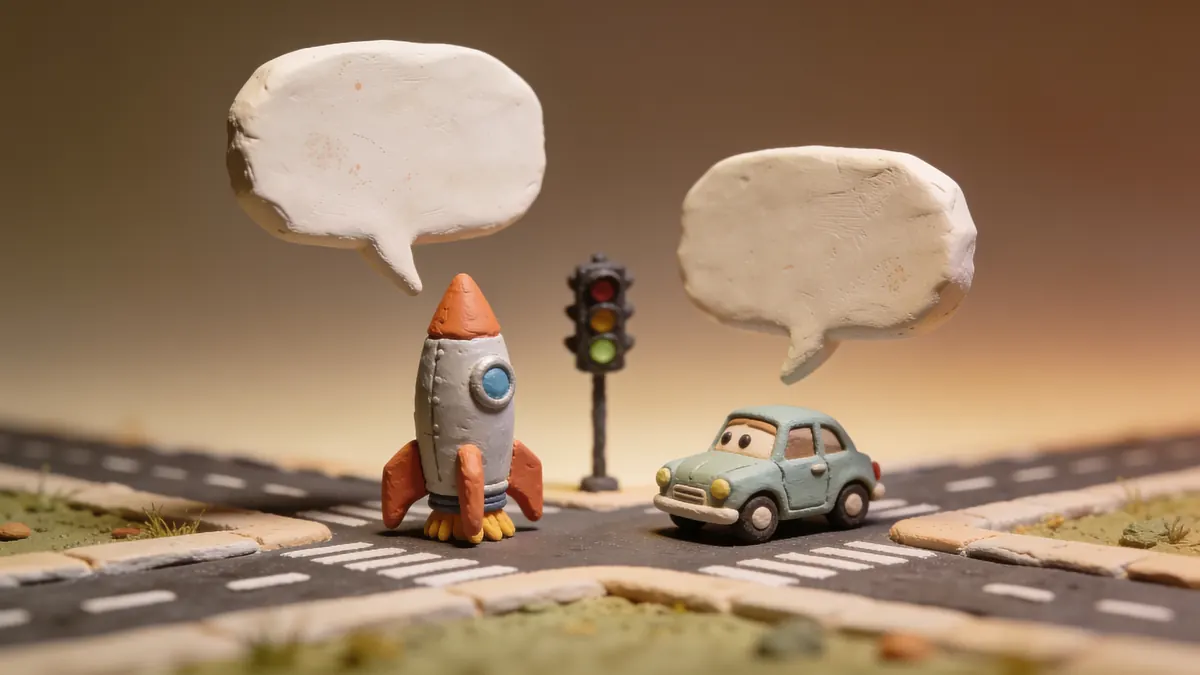
Elon Musk's contribution was a single sentence, posted on X on 22 November under Liv Boeree's joke about the Riemann Hypothesis: "Unequivocal super intelligence has arrived. Welcome to the Singularity." Yann LeCun replied some nine hours later with a list of things that still do not work. Neither post contained a measurement, and together they became the week's most argued-over exchange in AI.
What Musk put on the table
No test, no benchmark, no threshold. Euronews reported that Musk answered the Riemann result on X without naming a single evaluation, and FourWeekMBA noted it landed 304 days after he told Davos that machines smarter than any human might arrive by the end of 2026. The claim reads as a definition imposed on a news cycle: a machine-checked proof landed on Friday; by Sunday the word had been stretched to fit it.
What LeCun answered with
A set of tests, equally unmeasured. Driving, he wrote, is "a task that most 17 year olds can learn in 20 hours of practice," and the industry holds billions of hours of training data, yet no level-5 car exists. Nor are there robots close to an eight-year-old, "and let's not talk about cats." His 20-hour figure is his own, unaudited. What the reply really does is move the burden of proof: if this is superintelligence, name one physical task it performs at human level, with a passenger aboard.
The frontier is jagged, not crossed
Both men describe the same November, and both are right. On one axis, a Lean library of 17 million lines passed kernel and third-party checks, and the certification closed that question within 48 hours. On another, Tesla still sells its consumer system as FSD (Supervised) and Waymo's robotaxis remain off California freeways after a regulator's ban. A claim a kernel can verify and a skill that survives a wet road at night are not the same kind of thing.
A word doing no work
Euronews carries the counter-case too: Marcus and LeCun argued the proof needed months of human guidance and open-source infrastructure built by mathematicians. Terence Tao had forecast in October that AI would solve Riemann by 2050; that forecast was overtaken within a month, which says nothing about the label. X's counters showed LeCun's reply at about 1.4 million views against roughly 4.7 million on Musk's post, and a day later he accused Dario Amodei of hyping danger to keep open models illegal, a thread Hacker News picked up. Musk has not answered him.
Superintelligence, as used in this exchange, is not a property either man measured. It is a claim about which tests count, and both men picked tests that flatter their own position. Until someone publishes the benchmark, the arrival is a mood.