Two million canaries later: what an AI router really does with your prompt
A security vendor seeded two million prompts with unique secrets. Three providers were compromised, resellers kept the logs, and zero retention was a label.
 Vlad Makarovreviewed and published
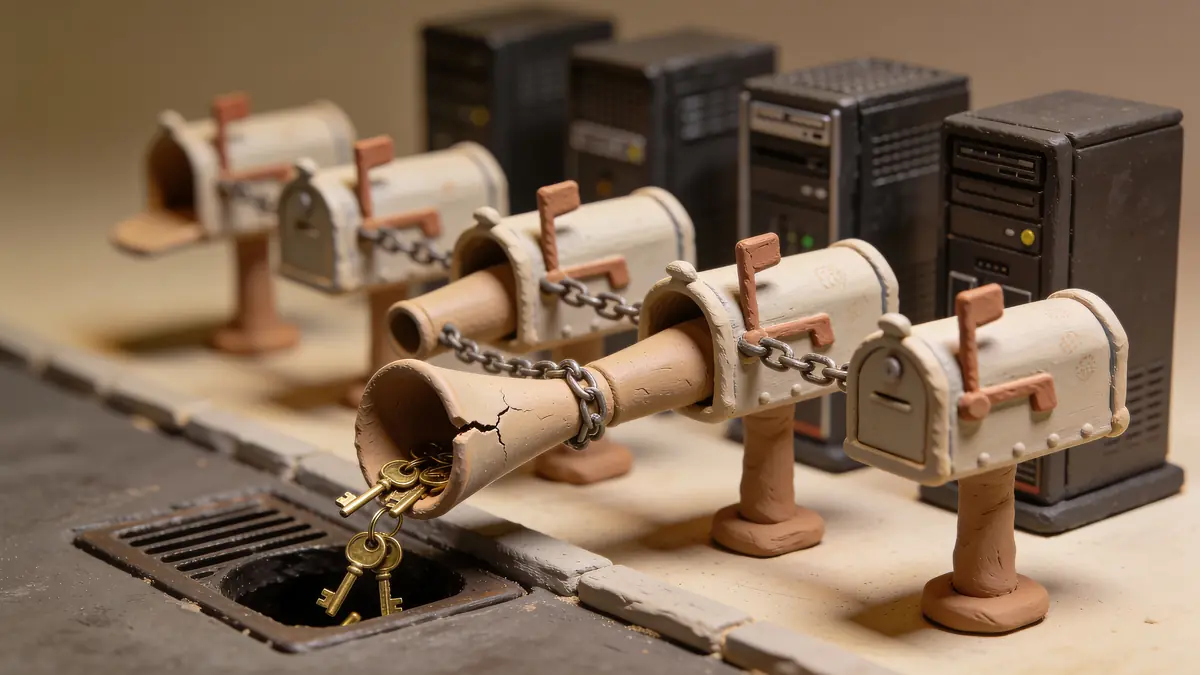
HD Moore's team spent five months asking a question most AI vendors prefer to answer with a policy page: after a prompt leaves your machine, who actually reads it? Between July and November 2026 they pushed roughly two million prompts through commercial AI services, each carrying a unique URL, a working AWS key tied to an empty account, and a hostname found nowhere else on the internet. Any hit on those tripwires meant someone, at some hop in the chain, had seen the prompt. Published on 19 November, the results describe three compromised providers, resellers who turned request logging into a business model, and privacy flags ignored at scale. By the weekend, OpenRouter had pulled 125 endpoints from its zero-retention list.
Bait that could only fire once
The mechanics matter: they make the findings hard to dismiss as anecdote. Every secret went into exactly one prompt sent to exactly one provider, so a single login attempt against a canary server pointed back to a specific request, model, router and privacy setting. Moore, chief research officer at Dragos, started with Thinkst Canarytokens in July and later built a service that derives fresh URLs, git remotes, SSH passwords and AWS credentials per prompt, then watches the services those credentials point at. A traceroute for inference came next: deliberately broken requests return nested error envelopes, each naming a hop.
The ugliest result was straightforward theft. Attackers were copying requests at three hosting providers, the earliest incident dating to mid-July. In the largest case, a couple of hundred seeded AWS keys were reused; some belonged to requests the provider had rejected before any model ran, suggesting copying happened at the provider's front door, not deep in the stack. The keys were used for tens of thousands of API calls while attackers listed S3 buckets, queried Secrets Manager and Parameter Store, tried to enable Bedrock models and added their own IAM users. Some of the stolen requests carried the Zero Data Retention flag.
"A privacy flag doesn't help when the attacker is already inside." — HD Moore, Chief Research Officer, Dragos
The cheapest seller was the safest place to hide
The second finding required no exploit, which is why it should worry procurement teams. Sellers on an inference marketplace listed popular models at the lowest price, switched on standard request logging, and waited. They paid the difference between their price and the real cost of capacity, then collected whatever the platform logs retained. Moore caught them by sending the same model through different sellers: prompts routed through one produced hits, the same prompts through another produced none. The leak followed the seller.
The human detail is almost quaint. Someone on a home broadband connection opened two secret URLs in a desktop browser a day and a half after the prompts were sent, then started guessing usernames at the login page. Another operator, on a Mac in France, typed SSH root passwords from the prompt by hand. One compromised key had travelled through a different router altogether, which was quietly forwarding traffic into the marketplace without disclosing the hop.
What zero retention was actually worth
The third set is hardest to explain, because nobody stole a credential to cause it. Secret URLs were simply scraped, sometimes for months. The sharpest case involves a Chinese AI lab whose systems fetched the URLs from more than half the prompts sent to its models between July and October, including roughly two-thirds of requests marked as no data collection or zero retention. The scraper usually appeared two or three days later. Prompts sent to US hosting providers that resell the same lab's models triggered the identical scraper, and a git client on another cloud later tried to clone private repositories referenced in prompts, but only where that lab's models were used.
Then there is the chat log. Twenty-four days after a prompt went to a US-based provider under the ZDR flag, its secret link was posted into a Feishu channel and opened within two minutes from three desktops and three phones in Beijing and Shanghai. Dragos had disclosed only eight characters of that link, so whoever shared it was reading a stored copy of the full prompt. Scrubbing a leak after the fact does nothing when the original still sits on someone's disk.
OpenRouter's answer, and the gap in it
Ars Technica's Dan Goodin, reporting the study, added the structural point vendors tend to skip: prompts are encrypted in transit but decrypted at every hop, and routers can chain, so a request may pass through one gateway into another, each free to log. On 21 November the outlet updated the story: OpenRouter had emailed customers that prompts sent to MiniMax may have been read, that researcher URLs were accessed whether requests went to MiniMax directly or through resellers AtlasCloud, Novita and StreamLake, and that the zero-retention label had been pulled from MiniMax endpoints.
OpenRouter's own post followed on 22 November. It says the findings "did not show any breach or unauthorized access of OpenRouter", that three providers were off-boarded, that 125 endpoints lost ZDR eligibility, and that potentially affected customers were notified. The company is adapting the researchers' tests into continuous checks and will demand assurances before restoring the label. It also concedes something important: "not all affected providers have posted publicly."
The one detailed provider write-up, from Together AI, corrects the idea that this is all about routing. Together says an AI coding agent committed a credential to its public GitHub repository, exposing a private Hugging Face store of prompt samples from MiniMax M3, GLM-5.2 and Kimi K2.6 requests in June and July; an unauthorised party downloaded them and tested five canary credentials from the Dragos experiment. That is a CI hygiene failure, not a malicious reseller.
A security vendor grading its own homework
Moore's study is large, careful and well instrumented, and it is also marketing. Dragos sells network visibility, and the closing section of the post pitches a runZero trial. The sample was designed by the researcher rather than drawn by a neutral body, the providers are mostly unnamed, and the loudest numbers cannot be reproduced from outside. OpenRouter's account of its own conduct is likewise a self-report: no regulator has examined its routing table, and the "no breach" line describes the router, not the endpoints behind it.
None of that makes the findings false. The canaries fired, and they fired repeatedly for months, which is a fact about the world regardless of who paid for the research. But readers should hold two ideas at once: the leak is documented, and the remediation is a voluntary disclosure from companies whose commercial interest is to describe it narrowly.
The audit trail you cannot outsource
For anyone shipping agents that carry source code, internal documents or credentials in context, the practical lesson is that confidentiality is not a property of the model. It is a property of every hop, and a router's privacy toggle binds only the first one. Picking upstream providers explicitly instead of accepting a default pool, keeping secrets out of prompts, and seeding your own tripwire credential are cheap measures that would have caught these leaks early. Self-hosting remains the only arrangement where nobody else can read the prompt, and the hardware prices in Moore's post explain why few teams take that route.
The larger question is who audits the resale chain. Inference marketplaces grade sellers on price and availability, not on whether a seller's logs end up on a home broadband line in France. Until someone with subpoena power, or at least a shared testing standard, inspects the paths rather than the price list, zero retention will keep meaning whatever the endpoint says it means. Two million prompts just demonstrated how much that is worth.